
Christianity
This means the contemplative side of Christianity: forms of practice from monasteries and spiritual schools, developed over centuries. Among them are the evening review of the day, the practice of forgiveness, and short prayers tied to the breath.
- Your Friendly Ping
Today, 07:15
Don't read it. Just do it.
“I offer the day — its good and its failings — to something greater. Then I rest.”
Deep DiveMoreThe Examen, developed by Ignatius of Loyola in the 16th century, is a daily review of the day's events in the presence of God — not an audit of successes and failures but a grateful attention to where grace was present and where one fell short of one's better nature. The practice ends not with self-condemnation but with surrender: placing the day, with all its weight, into something larger. Thomas Merton wrote: 'The biggest human temptation is to settle for too little.' The Examen refuses this by refusing to let the day pass unexamined. Its final movement — rest — is not passivity but trust: the day belonged to something larger than my management of it. That larger thing has not been diminished by my failures. I can rest.
Ping done - Your Friendly Ping
Today, 09:40
Don't read it. Just do it.
“Whom have I not forgiven? Today I set down one small part.”
Deep DiveMoreEverett Worthington, who has studied forgiveness for four decades, draws a line that makes the whole thing possible: decisional forgiveness — choosing to stop treating someone as a debtor — is not the same as emotional forgiveness, the slower fading of the resentment itself. The decision can be made today. The feeling arrives on its own schedule, or does not. Waiting for the feeling before making the decision is what keeps people bound for years. Worthington knows the territory personally; he did this work after his own mother was murdered. The Lord's Prayer names the same asymmetry — forgive us as we forgive — the one petition that comes with a condition attached. And forgiving is not absolving, not reconciling, not pretending it was acceptable. It is declining to carry the collection notice any further. Not all of it. One small part of it, today.
Ping done - Your Friendly Ping
Today, 12:30
Don't read it. Just do it.
“I place a hand on my chest and feel what my heart wants to tell me.”
Deep DiveMoreYour heart begins where the mind ends. Blaise Pascal — a mathematician, and no enemy of reason — knew both territories and wrote in his Pensées: 'The heart has its reasons which reason knows nothing of.' It is not about softening thought and making it more emotional. It is a second way of knowing, and it speaks only in stillness, once the thoughts and the clever arguments have gone quiet. There the silence of the heart is waiting, at one with the deep dimension of the present. It speaks through what you sense inside — your inner compass. It does not calculate, it settles no accounts, it follows no straight line. So when the analysis keeps circling, don't ask louder. Go quiet. Something in you has already answered.
Ping done
The day gets an ending
Looking back over the day and then setting it down is one of the oldest evening practices there is — and one of the few that also holds after a bad day.
Forgiving is a decision
You do not have to feel warm again in order to stop treating someone as a debtor. That distinction is what makes forgiveness workable at all.
Handing over instead of carrying on
Leaving to something larger what you do not hold anyway works as a practice even for someone who does not share the religious frame.
What the Christian practice is
What appears in this app is not Christian doctrine but its practice — the part that has almost vanished from public perception behind creeds and institutions. It exists: a body of procedures developed over centuries, often closer to what Eastern traditions call meditation than either side likes to admit.
Three forms stand behind these pings: the daily review of the day, forgiveness in its sober form as a decision rather than a feeling, and handing over what you do not hold anyway.
Origins
The roots lie in the third and fourth centuries with the desert monks of Egypt and Syria, whose terse sayings read, in their bareness and humour, astonishingly like the later Zen collections.
From that desert practice came monasticism, and with it an ordering of the day that became the pattern for all of Europe: fixed times of pausing spread across the day, each announced by a bell. That is the nearest historical relative of what this app does — a sound that interrupts, and behind it a short practice.
Key figures in the Friendly Pings
Strikingly mixed: beside a founder of an order and a mathematician stands a contemporary forgiveness researcher — these deep dives follow the practice, not the denomination.
Ignatius von Loyola1491–1556
Entwickelte das Examen, den täglichen Rückblick auf den Tag — ausdrücklich keine Leistungsbilanz, sondern eine dankbare Durchsicht. Der abendliche Ping, der den Tag übergibt, kommt von dort.
Image: (unbekannt) · Public domain · Wikimedia Commons
Blaise Pascal1623–1662
Mathematiker und kein Feind der Vernunft — und trotzdem derjenige, von dem der Satz stammt, dass das Herz Gründe hat, die die Vernunft nicht kennt.
Image: unknown; a copy of the painting of François II Quesnel, which was made for Gérard Edelinck en 1691[réf. nécessaire]. · Public domain · Wikimedia Commons
Everett Worthingtongeboren 1946
Erforscht Vergebung seit Jahrzehnten. Seine Unterscheidung macht die Sache überhaupt erst machbar: Sich zu entscheiden, jemanden nicht länger als Schuldner zu behandeln, ist etwas anderes, als ihm gegenüber wieder warm zu empfinden.
Meister Eckhartetwa 1260–1328
Dominikaner und Mystiker. Dass in dieser Sammlung ein christlicher Prediger neben Advaita steht, hat einen Grund: seine Beschreibung der Gelassenheit trifft dieselbe Erfahrung mit anderen Worten.
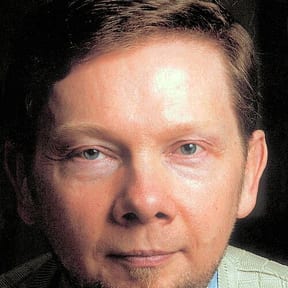
Eckhart Tollegeboren 1948
Sein Kerngedanke — dass du nicht deine Gedanken bist, sondern das Bewusstsein, in dem sie auftauchen — trägt einen großen Teil der Pings zu Präsenz und Loslassen.
Image: Kyle Hoobin (twitter.com/kylehoobin) · CC BY-SA 3.0 · Wikimedia Commons


_Founder_of_the_Jesuits.jpg)


This selection follows the app, not the tradition: these are the people actually named in the deep dives of the Friendly Pings, ordered by how often. Centuries of practice cannot be represented by a handful of names, and that is not the claim here.
What these pings aim at

Pause in the middle of your day — and move on with more clarity
Bring mindfulness into the middle of your life. Just try it.